Hard water spots on a car in Menifee come from the mineral-heavy water used across inland Riverside County. Washing a car at home with that water, then letting it dry in the heat, is a leading cause of water spots and mineral etching on paint.
Hard water spots on a car in Menifee are one of the most common problems we see, and most of them start in the owner's own driveway. The water that comes out of a garden hose across inland Riverside County is mineral heavy. When that water dries on paint, glass, and wheels, the minerals stay behind.
Royal Rinse Mobile Detailing is based in Menifee, California, and we wash cars every week in Menifee, Murrieta, Temecula, Perris, and Hemet. This guide explains what hard water does to a car's finish and how to stop the damage.
What is hard water, and why is it common in Riverside County?
Hard water is water with a high level of dissolved minerals, mainly calcium and magnesium. Much of Southern California's water is imported over long distances, including from the Colorado River, and it picks up minerals along the way. Household water in inland Riverside County is generally considered hard.
Hard water is safe to drink and use around the house. Hard water on a car is a different matter, because the minerals do not leave when the water does. The white crust that builds up on shower heads and faucets in the Menifee area is the same residue that ends up on a car's paint.
How do hard water spots form on car paint in Menifee?
Hard water spots form when a drop of mineral-heavy water evaporates and leaves its minerals on the paint as a ring or a dot. Every drop that dries on its own leaves a small deposit. A car rinsed with a hose and left to air dry can end up covered in them.
The inland climate speeds the process up. Valleys along the 215 and 15 corridors are hotter and drier than the coast, so water evaporates from a car much faster in Menifee than it would in coastal San Diego. A car washed in the afternoon sun can start spotting before the owner finishes rinsing the roof.
Can hard water etch a car's clear coat?
Hard water can etch a car's clear coat when mineral deposits are left on the paint and heated by the sun. A fresh deposit sits on top of the paint and usually comes off with a proper wash. A deposit that bakes in place can bond with the clear coat and eat into the surface, leaving a mark that remains after the minerals are gone.
Mineral etching looks like a faint crater or ring that a wash will not remove. Removing etching takes machine polishing to level the clear coat around the mark, the same process covered in our guide to paint correction and where swirl marks come from. Deep etching cannot always be removed completely, which is why prevention matters.
Dark paint shows water spots worst. Black, dark gray, and deep blue cars show every ring in direct light, while white and silver cars hide the spots until the light hits at an angle.
What does hard water do to glass, chrome, and wheels?
Hard water leaves the same mineral deposits on glass, chrome, and wheels, and each surface shows the damage differently. Spotted glass scatters light, which makes a windshield harder to see through at night and in low sun. Chrome and polished trim lose their mirror finish under a dull, chalky film.
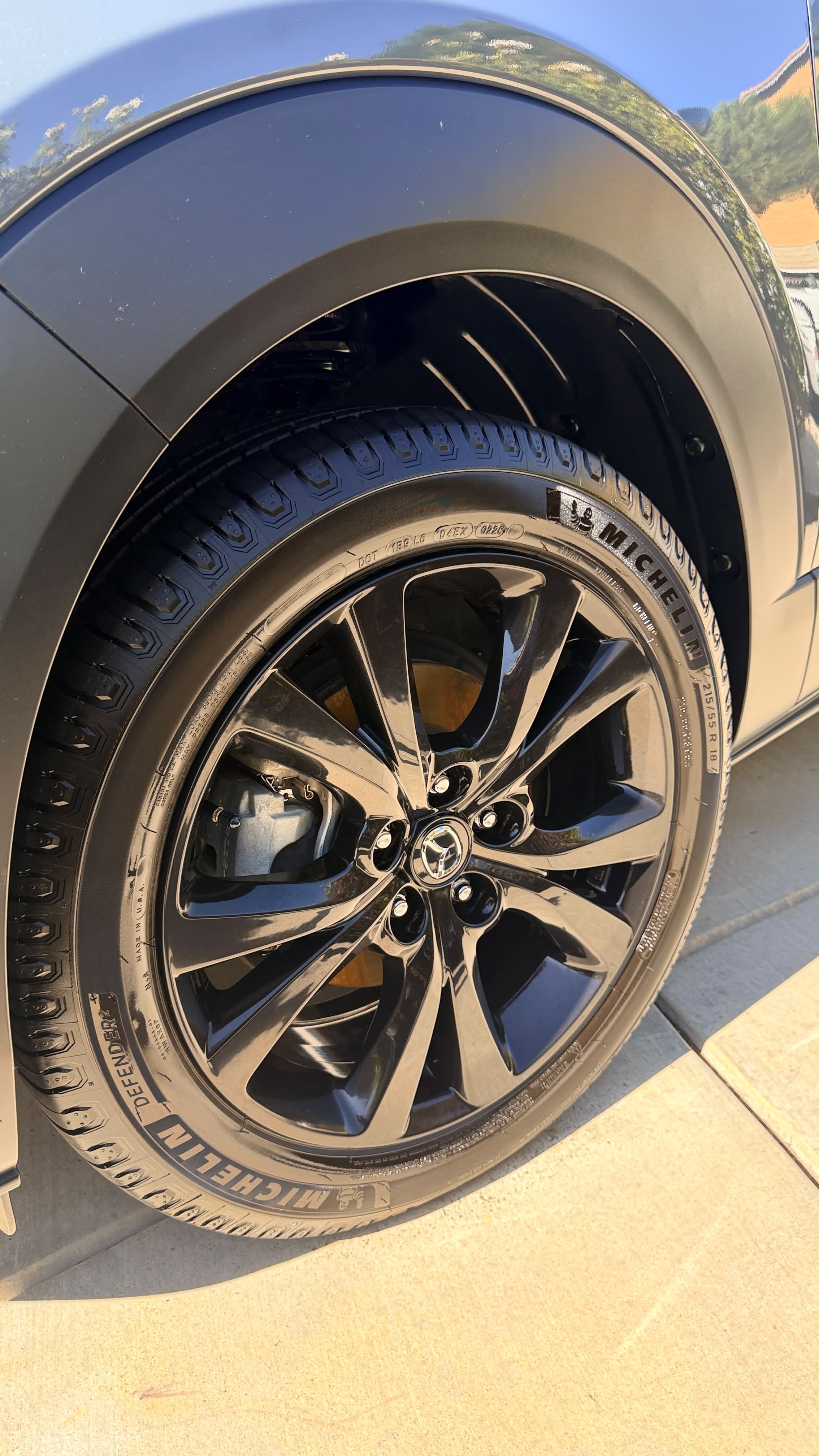
Wheels often have it worst. Wheels run hot, collect brake dust, and are usually rinsed last and left to dry in the sun. Mineral spots on a hot wheel bake on quickly, and gloss black wheels show every one.
Why doesn't towel drying fix hard water spots?
Towel drying does not fix hard water spots because a towel removes the water but not reliably the minerals, and rushed drying can add swirl marks. Water starts evaporating the moment the rinse stops. On a warm day in Menifee, the first panels are already spotting by the time a towel reaches them.
Racing the sun also tempts people to press harder. Rubbing at a dried spot drags any grit on the surface across the clear coat, which is how fine scratches and swirls begin. Gentle drying technique matters, but no technique can make up for mineral-heavy water.
How do you prevent hard water spots on a car?
The most reliable way to prevent hard water spots on a car is to finish every wash with deionized water, which has had its minerals removed and dries without leaving anything behind. A spot-free rinse removes the cause instead of racing against it. Our explainer on how deionized water prevents water spots covers how the filtration works.
- Rinse with deionized water. Pure water evaporates clean, so nothing is left behind to spot or etch.
- Wash in shade or in cooler hours. Slower evaporation leaves more time to rinse and dry properly.
- Dry gently with clean microfiber. Soft, clean towels and light pressure keep drying from scratching the paint.
- Protect the paint. A sealant or ceramic coating makes water bead and roll off, so less of it sits and dries on the surface.
A ceramic coating does not make a car immune to hard water. A coating does make mineral spots less likely to bond and much easier to remove, which matters in a dry, sunny climate like inland Riverside County.
Water spots that wipe off are a cleaning problem. Water spots that stay after a proper wash are an etching problem, and etching needs polishing.
Where can you get spot-free car washing in Menifee?
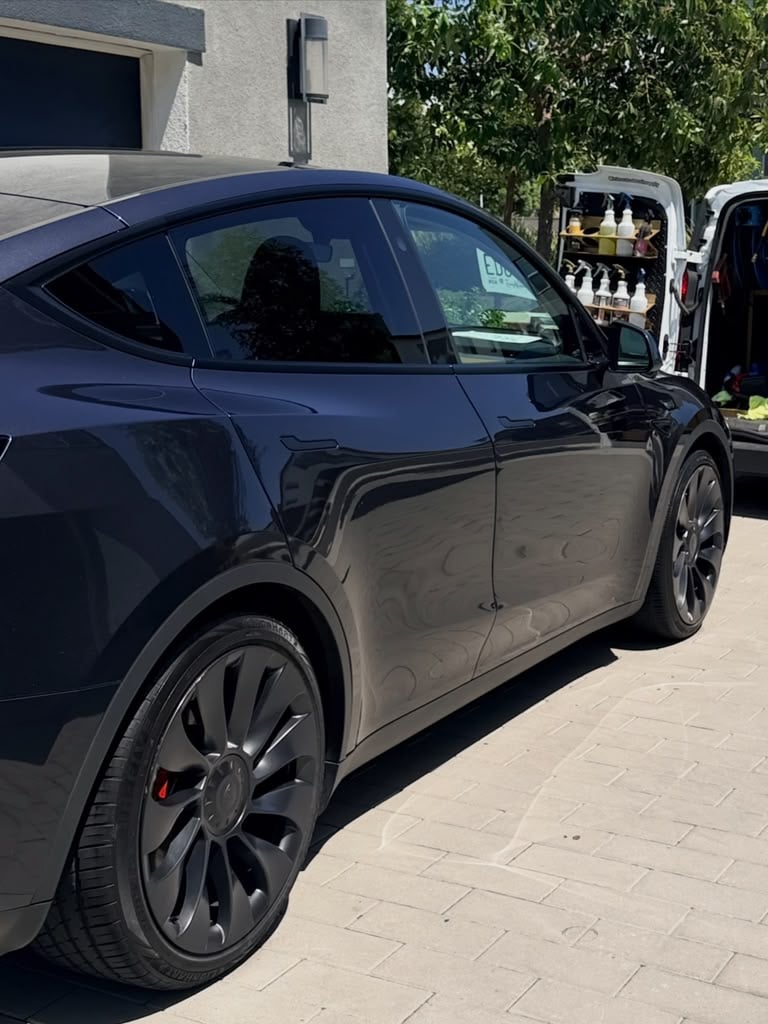
Royal Rinse Mobile Detailing is based in Menifee, California, and brings spot-free, deionized water washing to the customer's home or office. Our rig carries its own water and power, so we never use your hose or your tap water. We serve Menifee, Temecula, Murrieta, Riverside, San Diego, and the surrounding areas, including Perris, Hemet, Winchester, Wildomar, Canyon Lake, and Lake Elsinore. See our Menifee mobile detailing page for how we work locally, or call or text (951) 338-9117 to book.
Frequently asked questions
Why does my car get water spots after I wash it at home in Menifee?
A car gets water spots after a home wash in Menifee because the tap water across inland Riverside County is hard, and its minerals stay on the paint when the water evaporates. Washing in direct sun or letting the car air dry makes the spotting worse.
Can hard water spots permanently damage car paint?
Hard water spots can permanently damage car paint when they bake in the sun, because the mineral deposits can etch into the clear coat. Fresh spots usually wash off, while etched spots need machine polishing to level the clear coat.
Does ceramic coating stop hard water spots?
Ceramic coating does not make a car immune to hard water spots, but it makes them less likely to bond and much easier to remove. Water beads and rolls off a coated surface, so less of it sits and dries on the paint.
How do you wash a car without leaving water spots?
The most reliable way to wash a car without leaving water spots is to finish with a deionized water rinse, which leaves no minerals behind. Washing in shade, working one panel at a time, and drying gently with clean microfiber also help.